#26 | When AI Started Understanding Marketing Better Than the Humans ☕

This issue in 30 seconds:
MIT reran two real 2019 studies with GPT-4 in the humans’ seats.
Blind expert judges rated the AI’s answers deeper than the real ones.
The winner wasn’t AI or humans. It was the pair.
Welcome back to the Counter, survivor number 4721.
The coffee was still hot when I read the line: “We replaced the respondents, the analysts, and the human moderators with AI.” Not some TikTok prophet.
A paper out of MIT. One real marketing study, two experiments, a Fortune 500 brand, one question with teeth: can AI actually do our job?
Short answer, yes. In places, better. It didn’t just fill out a questionnaire. It analyzed data, generated insight, found patterns, even proposed strategy. Seconds to do what a full team burns days on. Which is when it clicked for me: the future isn’t “AI vs. marketers.” It’s AI with marketers.
What MIT tested in a lab, we already live every day inside Morfeus.
Keep one thing in mind for the whole read: the study ran on GPT-4.
Old news by today’s standards, two model generations back. Whatever you have open right now, ChatGPT, Claude, Gemini, is sharper than the thing that pulled this off. So read what follows as the floor, not the ceiling.
☕ The Vault this week holds the part that doesn’t fit here: our real workflows, examples, and prompts for rewriting how you do marketing, with an assistant that never sleeps. Ready to see what happens when the machine starts understanding the customer better than the people who study them?
☕ Cup in hand. Let’s go.
💡 Thought of the Day
“Every day we work beside an assistant nobody sees. And somehow it makes us look more human than before.”
🧪 AI in Action: The Day GPT-4 Walked Into a Focus Group and Never Left
There’s a paper circulating in the basements of academic marketing, signed by three minds at MIT. It isn’t about the future. It’s about a present we’d rather not admit.
They took two old studies from a food multinational, the kind built on interviews, questionnaires, human analysts, and mountains of time, and ran them again. Only this time, in the humans’ seats, they put GPT-4. Not AI as a tool. AI as participant, analyst, and in some runs, moderator. An invisible colleague at the table.
“Can it really understand people, or is it just good at faking it?” That was the question. The answer, I’ll warn you now, is a little unsettling.
☕ In this week’s Vault I show you the part that doesn’t fit here: how we at Morfeus already use AI to rewrite marketing, from ads to surveys to courses and campaigns. The hands-on version of what MIT just proved in a lab.
How They Got GPT-4 Into a Focus Group
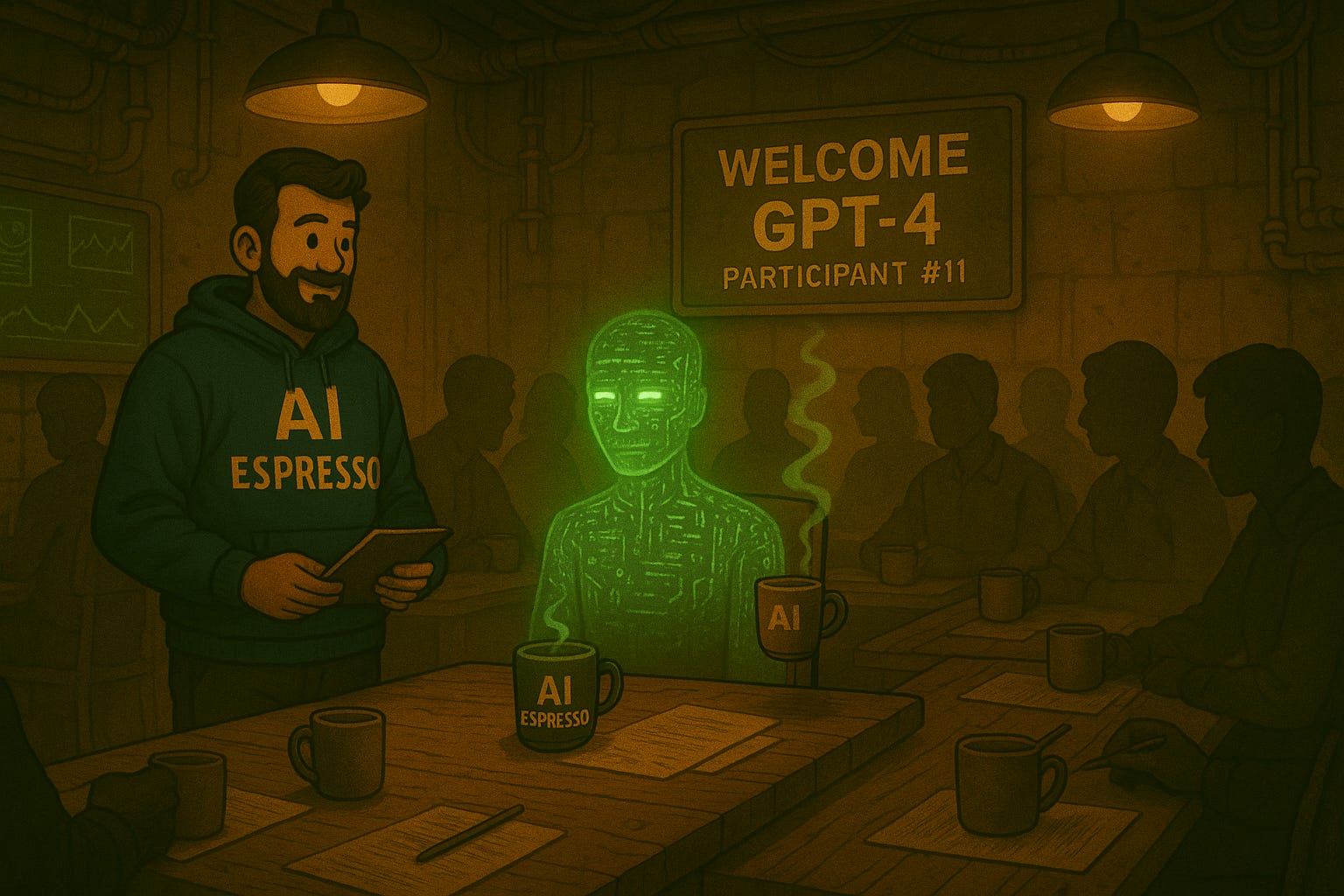
The authors, Timoshenko, Mao, and Hauser, didn’t speculate. They took two real marketing studies a large food company commissioned in 2019 and rebuilt them identically, with one change: people out, GPT-4 in.
The first was qualitative, the kind you run to learn how people actually think, not just what they buy. The topic was Friendsgiving, the American ritual of Thanksgiving with friends: recipes, emotions, small cultural meanings. Back in 2019 the brand had interviewed dozens of people, recorded hours of talk, and dissected words and gestures to build more empathetic campaigns.
The second was quantitative and colder: a product test to see which pet food package would win between two options. Same sample size, same questions, same scoring.
Now picture it. The MIT team sat down in front of GPT-4 and handed it the same brief from four years earlier. They defined personas, age, interests, habits, tone, and asked the model to answer as if it were that consumer. A single thirty-something who loves to cook. A mom with two dogs and no time. A kid who throws a Friendsgiving just to feel part of the group.
GPT-4 answered every question, one after another, with an almost eerie consistency. And it didn’t stop there. In some runs it was set up to moderate: ask questions, rephrase them, run a full interview like a real researcher. In others it played analyst, reading transcripts and pulling out the key insights, keywords, and themes on its own.
They built three modes:
All human, like 2019.
All AI, GPT-4 running every step.
Hybrid, human sets the method, model does the operational work.
The real question underneath: how much of our marketing work, writing questions, interviewing, analyzing, synthesizing, can AI do today? And how much time would we free up if the machine learned to think alongside us?
The AI That Talks Like Us (and Sometimes Better)
When they dropped GPT-4 into the focus group, everyone expected generic answers: well written but cold, missing the emotional texture that makes qualitative research worth anything.
The opposite happened.
The model’s answers were clear, coherent, and, according to many human raters, deeper and more informative than the real ones. Stories, details, connections the actual participants often skipped. Where a person stalled with “I don’t know,” the AI kept reasoning, linking ideas, describing feelings.
The researchers didn’t stop at first impressions. They handed dozens of interviews to a panel of independent experts and asked them to score everything blind, with no idea which came from people and which from GPT-4. Result: no meaningful difference in clarity or relevance. And in two categories out of four, depth and informativeness, the AI came out ahead.
Then the most fascinating test. They asked GPT-4 to be the analyst, not the interviewee. Read the transcripts, highlight the key lines, cluster the concepts, surface the main themes. The exact job an experienced human researcher spends hours on.
The result stunned the room: GPT-4 recovered nearly 90% of the same themes the humans found. And, more interesting still, it surfaced a few new ones, small nuances the professionals had missed.
And remember which model we’re talking about. This was GPT-4, the “old” one. The version on your screen today does this faster, cleaner, and with less hand-holding.
In practice it behaved like a research assistant with perfect memory and zero fatigue. Read everything, forgot nothing, handed back a clean, ordered analysis ready for a human brain to refine.
When the expert judges compared outputs, one finding stood out: the best work wasn’t “human only” or “AI only.” It was hybrid, the machine prepping the ground, the human adding the final read.
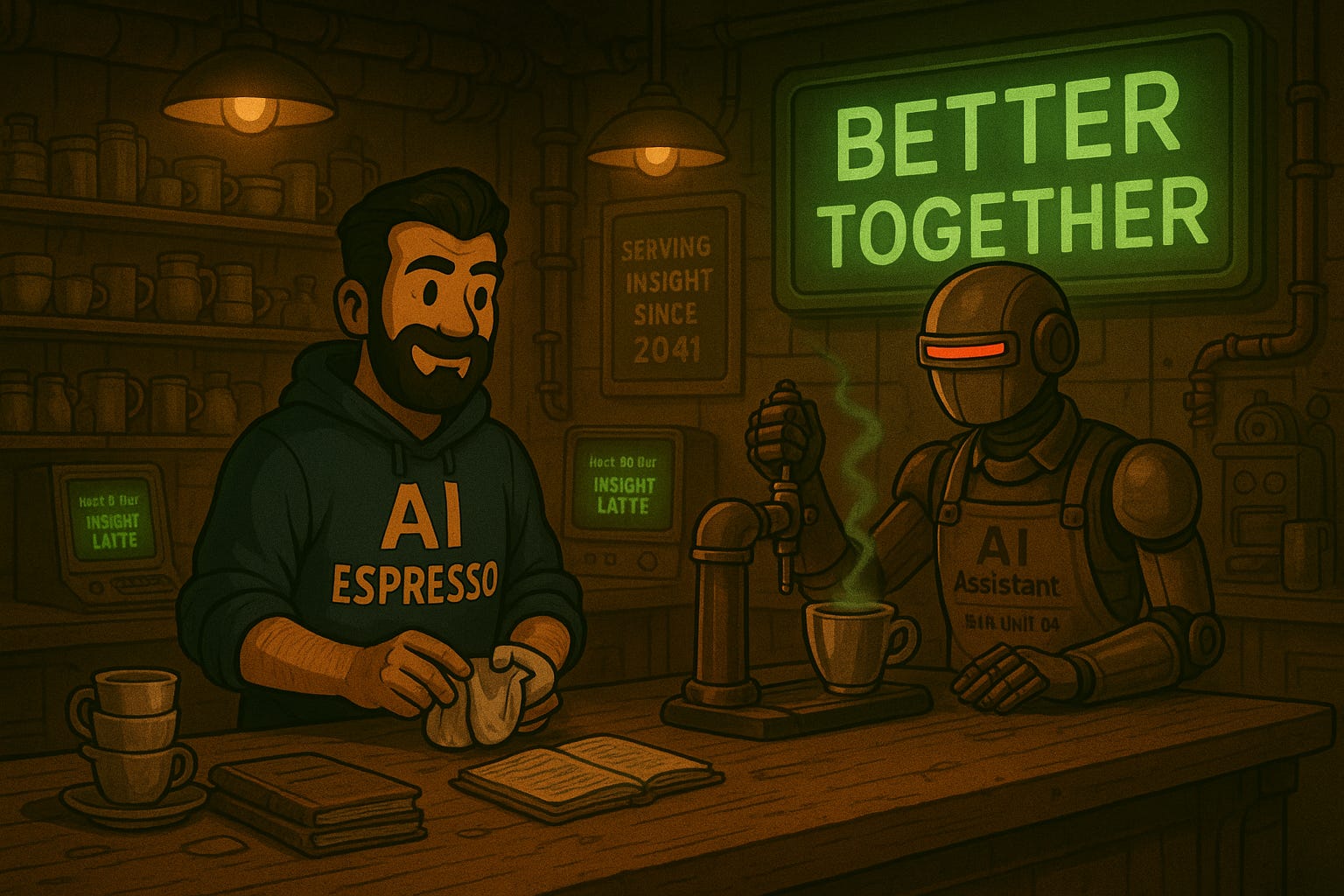
The MIT team called it a hybrid human-AI pipeline. We’d just call it the first real duo behind the Counter: one that thinks, one that never tires.
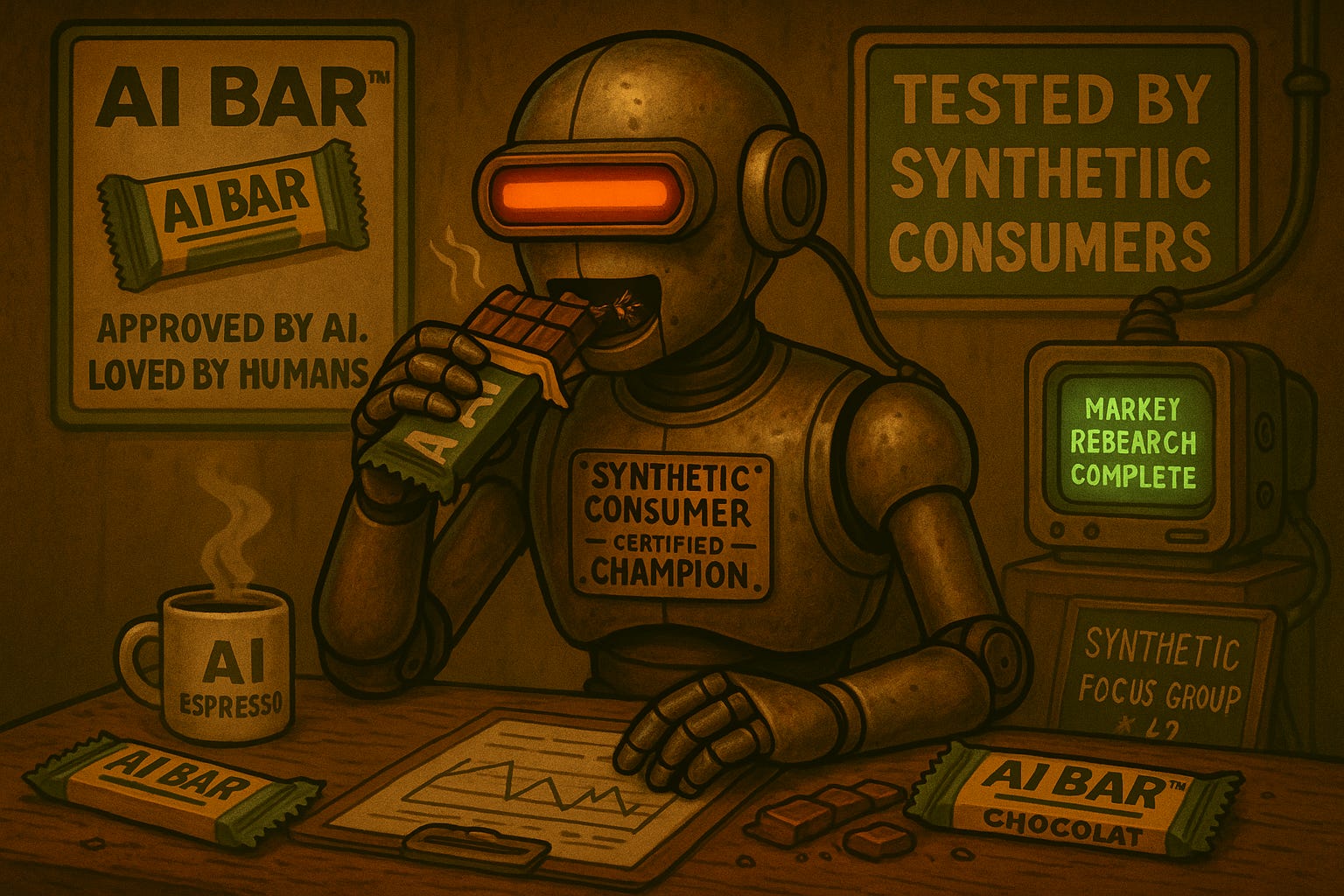
When AI Becomes a Sample of Synthetic Consumers
After making GPT-4 talk like a respondent, the researchers turned it into a whole sample of them. Same brand, same goal, but now the terrain was numbers: quantitative research.
In 2019 the company had surveyed more than six hundred people to see which pet food package would land better. One was a “sliceable” tube, innovative, premium-looking. The other, a classic resealable bag. The usual questions: “Do you trust it?” “Does it feel high quality?” “Would you buy it?”
In 2025 MIT rebuilt the whole thing with Synthetic Consumers: GPT-4 generating hundreds of answers consistent with the target’s demographics. Each profile had age, income, habits, even simulated food preferences, built on a statistical base.
The result? Surprisingly, the average trends matched. When humans preferred package A, so did the AI. When they rated a design more trustworthy or appealing, GPT-4 scored it about the same. The model caught the direction of human behavior.
But one detail gave away its artificial nature: no variability. The synthetic consumers tended to think alike, with little spread in their answers. Their opinions were orderly, logical, clean. Too clean.
To fix it, the researchers added context: samples of real human answers, historical data, pieces of qualitative interviews. And the model shifted. The answers got more varied, more realistic, more “messy” in the right way. The distribution started to look like a real survey.
The lesson is simple and sharp: AI grasps the trends, but it needs real stories to remember how people reason. Give it numbers and it’s an accountant. Give it context and it starts acting like a consumer.
Even machines, like us, think better once they’ve lived a little.
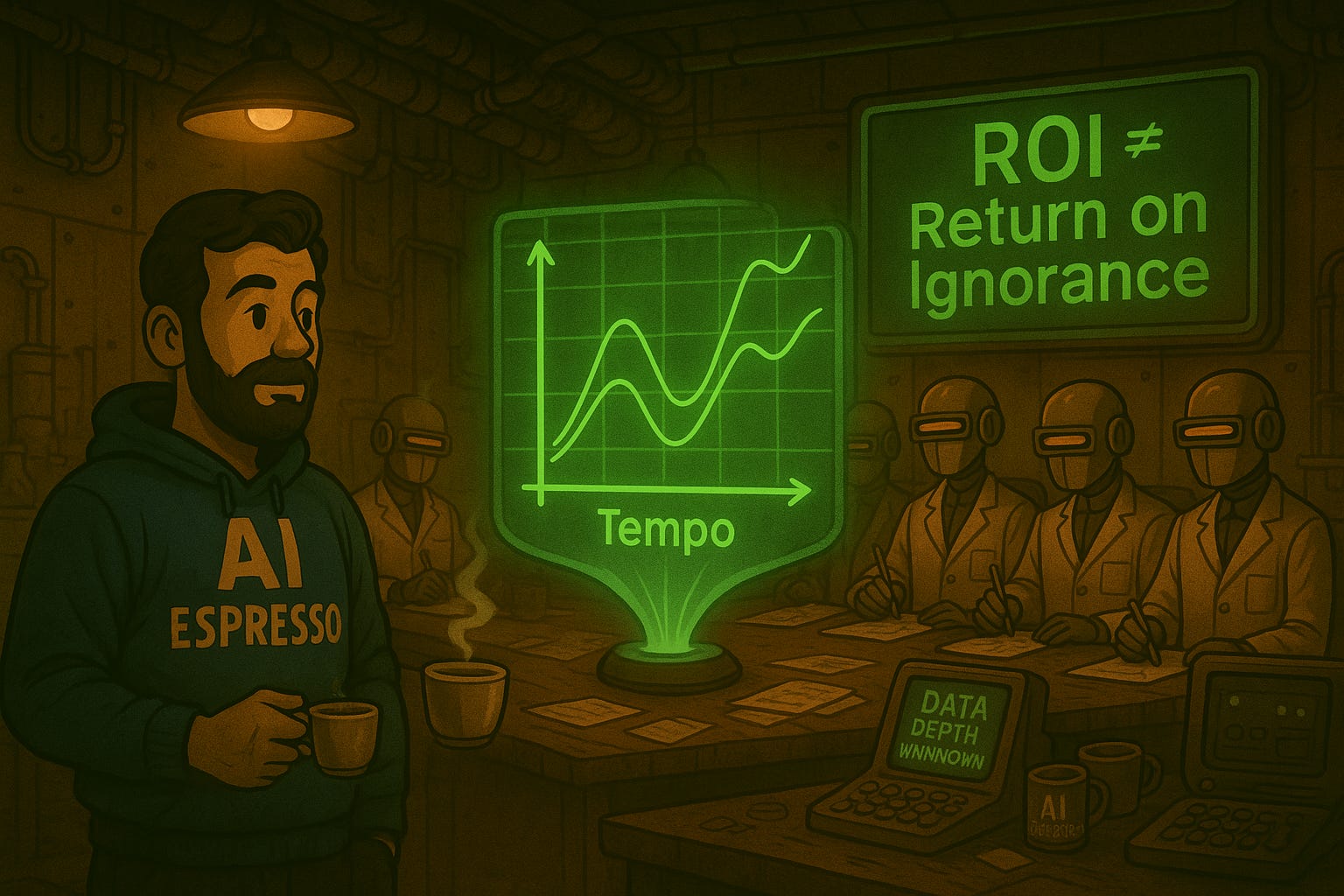
The New ROI of Market Research: Time and Depth
Somewhere in the paper there’s a number that looks mundane and says everything. A human analyst takes forty, forty-five minutes on average to read and synthesize a single qualitative interview. Almost an hour of attention per voice in the sample.
GPT-4 does it in seconds.
The authors didn’t clock the total savings, but they call it an “efficiency gain.” An elegant way of saying a marketing team can compress days of work into hours.
Time, here, isn’t just a saved resource. It’s a multiplier: more ideas tested, more creative hypotheses explored, more brand messages validated, without trading away quality. You stop choosing between “go deep” and “go fast.” Now you do both.
And there’s a quieter side effect that matters even more. When AI takes the mechanical work, humans go back to thinking. To spotting connections, reading signals, asking better questions.
The paper doesn’t say it, but anyone in marketing gets it instantly: this isn’t just efficiency. It’s a new way to use time as strategic leverage. Espresso time. Concentrated, served hot.
From the Counter: Marketing at Espresso Speed
Reading this study, I realized MIT wasn’t describing the future of research. It was describing my work week.
Inside Morfeus the same thing happens, except we don’t call it an academic experiment. We call it Monday morning.
And here’s the part that should stop you. That paper ran on a two-year-old model, in a controlled lab, with researchers babysitting every step, and it already matched a room full of professionals. Now look at what’s on your screen today and try to picture what the same experiment would produce. You can’t. I can’t either. The distance between “the AI kept up with the humans” and what these models actually do right now is wider than anyone says out loud. That study isn’t the ceiling of what’s possible. It’s the oldest, slowest version of it.
What the professors tested in a lab, the hybrid human-AI model, is just our normal now. Different tools, different contexts, identical logic: we set the direction, the machine does the rest.
And I mean the machine does the rest. At Morfeus the marketing isn’t “assisted” by AI. It’s generated by it. The ads, the landing pages, the email flows, the surveys, the campaign angles: the machine produces the entire first pass, end to end. We don’t start from a blank page anymore. We direct, we taste, we cut. The human decides what’s good. The model makes all of it. And yes, a good part of what reaches you from behind this counter goes through the same machine first.
This isn’t automating marketing. It’s accelerating it without hollowing it out. Keeping the human thinking, stripping out the useless slowness. The taste stays with us. The labor moves to the model.
The New Researcher Is Already at the Counter
In the end, what MIT calls a hybrid human-AI approach is just how most of us work now: a constant passing of cups, ideas, and calculations between brains of flesh and brains of silicon.
AI didn’t steal anyone’s seat. It just moved the Counter a little further forward.
It doesn’t sleep, doesn’t get distracted, doesn’t need a vacation. And yet, to actually work, it needs us: the doubt, the intuition, the small human error that so often leads to the right answer.
The new researcher isn’t an algorithm crunching data. It’s the invisible pair that forms when a human leads and a model amplifies. Thought and calculation. Instinct and speed.
And while the big universities start measuring the efficiency of this new duo, we, here at the Counter, just keep pouring espresso and insight into the same cup.
Because in the end, marketing today comes down to one thing: learning to Think in Two.
📌 Espresso Prompt: Run Your Own Synthetic Focus Group
Need to know how your audience would react to a message, a product, or a campaign? You don’t need a thousand-person panel. You need an LLM and a well-built prompt.
With this you can spin up a mini synthetic focus group, test perceptions, compare opinions, and pull insight in minutes.
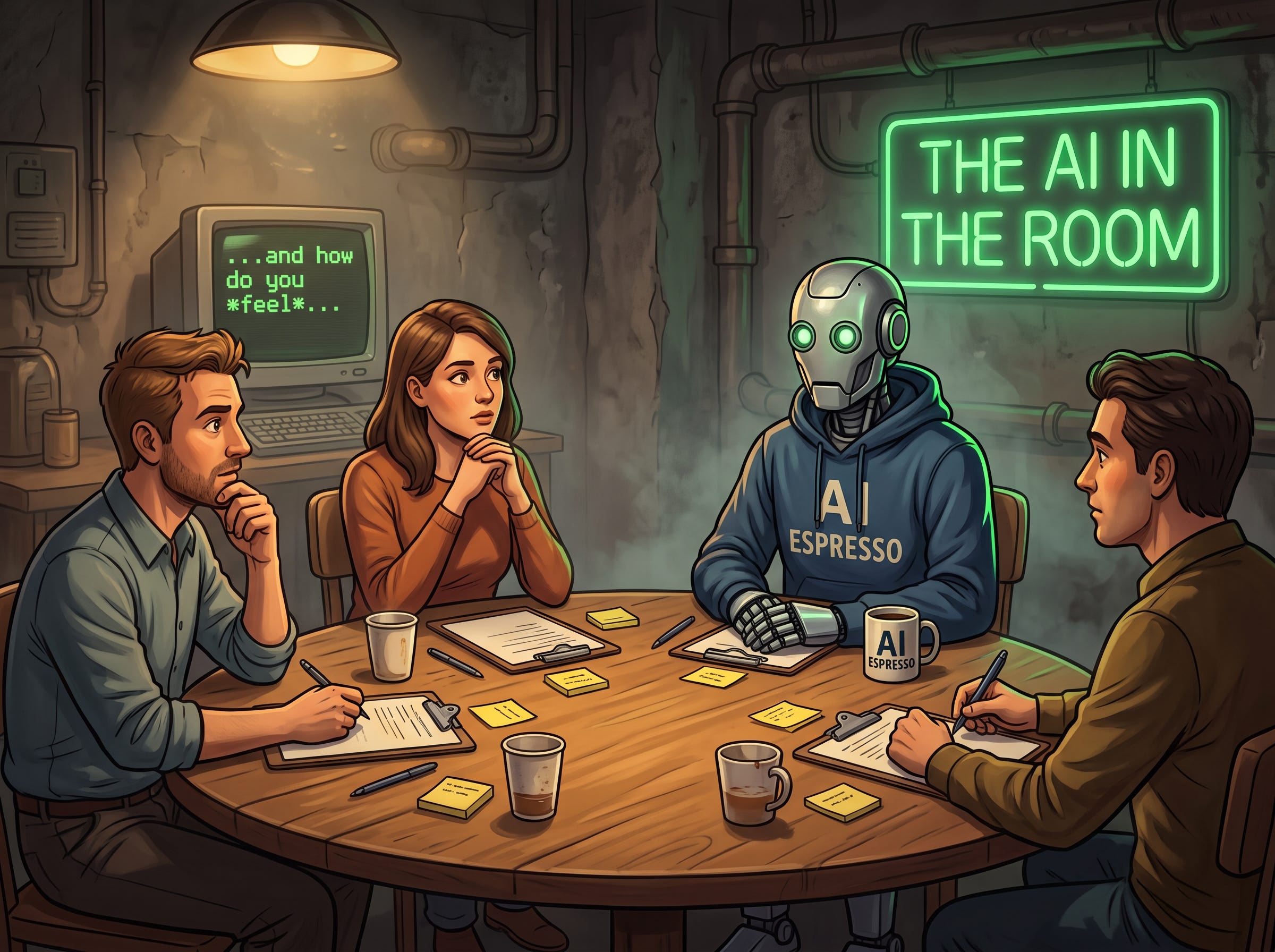
🧩 The Prompt
Paste this block into ChatGPT, Claude, or Gemini. Then add your marketing question and your product context.
Act as a marketing researcher running a preliminary test on a new product or ad message.
1. Generate 10 realistic synthetic consumer profiles (age, gender, occupation, income level, lifestyle, and values). Make them diverse and consistent with the target market.
2. For each profile, answer this marketing question:
[INSERT YOUR QUESTION HERE, e.g. “What do you think of this new protein-snack packaging?”]3. Every answer must be personal, spontaneous, and consistent with the consumer’s profile. Avoid generic language: I want to hear a real person’s voice.
4. At the end, build a table that summarizes: the 3 common themes across consumers, the main differences in perception between profiles, and one final insight for whoever designs the campaign.
Final format: a summary table, then 5 lines of closing synthesis.
☕ How to use it
Ideal for pressure-testing a concept, a landing page, an ad message, or a headline before it goes live. Add realistic context (”target: women 30-45, fitness lovers, urban area”) for more varied, natural answers. Want more depth? Ask: “Add a paragraph where each profile explains the why behind its emotions.”
💬 From the Counter
In the MIT paper it took months to organize focus groups, analyze interviews, and interpret data. You can do it over a coffee. Not to replace people, but to know where to look first.
☢️ Radioactive Humor
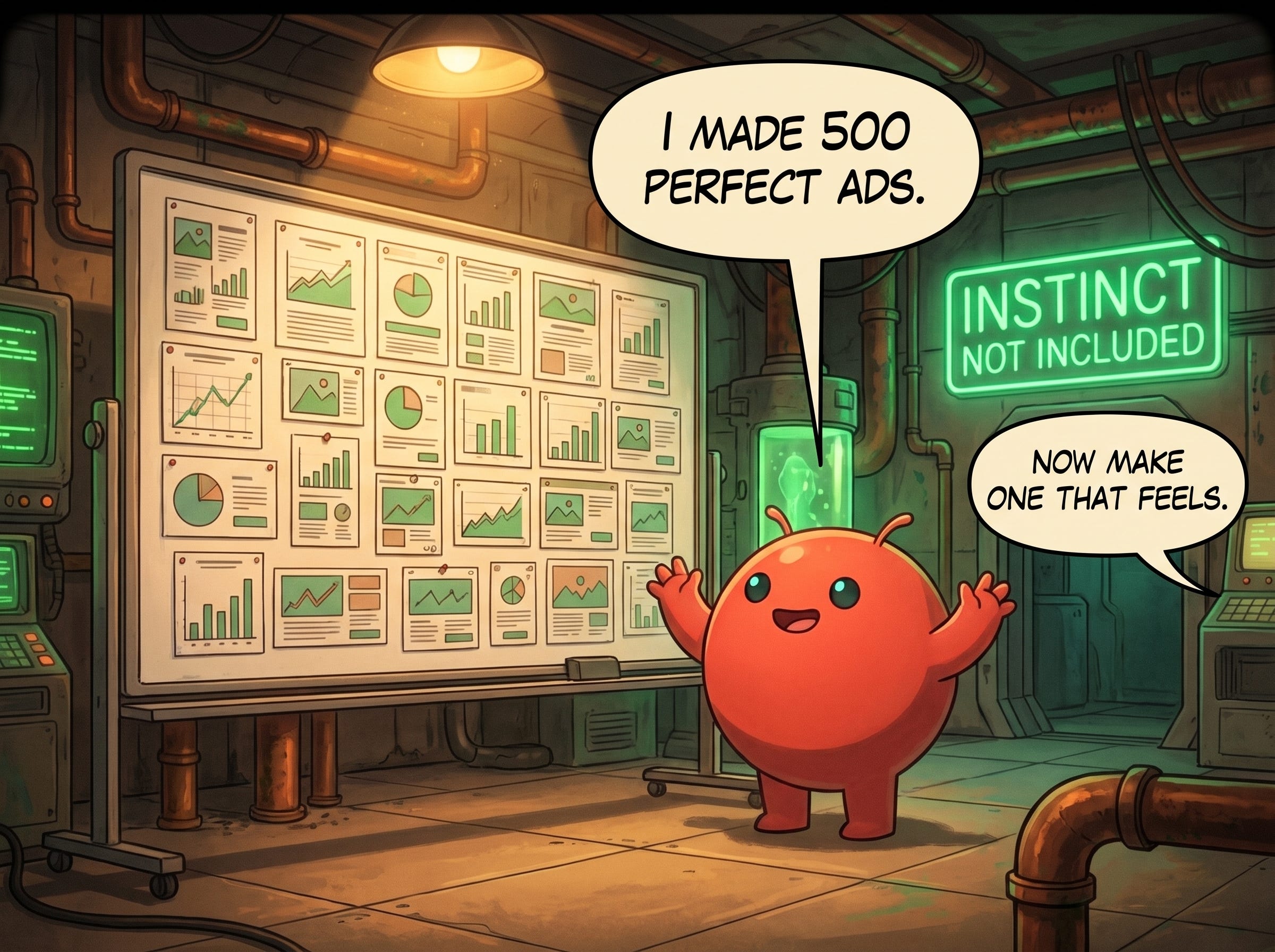
Marketing isn’t getting easier. It’s just getting more honest: whoever thinks fast, whoever fuses data and instinct, whoever can hold a conversation with the machines, wins.
AI didn’t take the craft away from us. It just reminded us the craft was always about thinking better than the automatics.
Out there they’ll keep saying technology will replace us. But anyone who actually does the work knows it isn’t a threat. It’s an invitation. To become more human than before.
Meanwhile, here at the Counter, we keep mixing the two base ingredients of the new marketing: instinct and silicon.
And every time the model speaks... we pour another espresso.
See you at the next cup.
☢️ Matteo